How Casino Game Mechanics Actually Work: A Technical Breakdown for
How Casino Game Mechanics Actually Work: A Technical Breakdown for Filipino Players Every spin on an online slot looks simple. You pick a game, set your bet, and hit the button. What happens next feel...

How Casino Game Mechanics Actually Work: A Technical Breakdown for Filipino Players
Every spin on an online slot looks simple. You pick a game, set your bet, and hit the button. What happens next feels like luck — but underneath the surface, a precise mathematical engine determines every outcome. Understanding that engine is the difference between playing blindly and playing with awareness.
This guide dissects the core mechanics behind casino games at Pin77 — covering random number generators, return-to-player percentages, live dealer fairness systems, and how regulatory oversight actually protects you. If you have ever wondered what is really happening when you hit spin, this is the technical walkthrough you need.
Photo by RDNE Stock project on Pexels
Why Mechanics Matter More Than Promotions
Filipino players are bombarded with casino promotions. Free spins, welcome bonuses, deposit matches — the offers never stop. But none of those promotions change one fundamental truth: the games themselves have built-in mathematical structures that determine your odds over time.
A platform can advertise the biggest bonus in Manila, but if the underlying game mechanics are not fair, that bonus is meaningless. The smartest players at Pin77 do not just compare promotions. They understand how the games work.
That starts with two concepts every player needs to know: RNG and RTP.

Photo by James Anthony on Pexels
Random Number Generators: The Engine Beneath Every Spin
RNG stands for Random Number Generator. It is the software algorithm that determines the outcome of every spin, card draw, and dice roll on Pin77. When you press the spin button, the RNG instantly produces a random number that maps to a specific reel position or game outcome. This happens in milliseconds — before the reels even finish spinning visually.
A properly functioning RNG produces uniformly distributed random numbers across its entire range. No spin is connected to the one before it. No symbol is "due" to appear. This is a common misconception: many players believe a slot is "ready to pay" after a long losing streak. In reality, each spin is an independent event with the same odds as every other spin.
Pin77 uses certified RNG systems as part of its platform infrastructure. Independent testing labs evaluate these systems to verify that number sequences are genuinely unpredictable and not manipulable by the platform or by players. This is the first technical layer of game fairness.
Return to Player: What the Numbers Actually Mean
RTP stands for Return to Player, expressed as a percentage. If a game has an RTP of 96%, it means that over a very large number of plays, the game returns 96% of all money wagered back to players in the form of winnings. The remaining 4% is the house edge — the platform is retain.
This does not mean you personally will get back 96 cents for every peso you bet. RTP is calculated across millions of spins. Your individual session can deviate wildly from the theoretical return. You might win big on a single spin or lose your entire bankroll in twenty minutes. Both outcomes are consistent with a game that has a 96% RTP.
Here is what matters practically:
- Higher RTP games statistically return more over time. Slots with RTP above 96% are considered player-friendly.
- Table games like blackjack and baccarat often have RTPs above 98% when played with optimal strategy.
- Progressive jackpot slots may have lower base-game RTPs because a portion of each bet contributes to the prize pool.
Pin77 offers games across a wide RTP range. Checking the theoretical return rate before playing is a habit that separates strategic players from casual ones. You can explore Pin77 games and review the options available on the platform.
How Live Dealer Games Maintain Fairness
Live dealer games introduce a human element — a real person deals cards or spins a wheel in real time, streamed to your screen. This raises a natural question: how does the platform ensure the dealer is not cheating?
The answer lies in three systems working simultaneously.
Physical game integrity. Live dealer studios use real cards, real roulette wheels, and real dice. The equipment is regularly inspected. Cards are shuffled according to defined procedures, and shoes are changed at mandated intervals to prevent any card-tracking advantage.
Optical character recognition. Modern live dealer setups use OCR technology to instantly capture every card dealt, every number on the roulette wheel, and translate those physical outcomes into digital data for the platform. This eliminates manual entry and ensures the results you see on screen match exactly what happened at the table.
Regulatory oversight. Platforms operating under PAGCOR compliance standards are required to maintain transparent game records and submit to periodic audits. For Filipino players, this means an additional layer of accountability beyond the platform is own promises.
Live dealer games at Pin77 use this multi-layered approach to deliver a fair experience that closely replicates a physical casino floor.
Volatility and Variance: Why One Game Feels Different From Another
Two slot games can both have a 96% RTP but feel completely different to play. This is because of volatility — also called variance.
Volatility describes the risk profile of a game:
- Low volatility slots pay small wins frequently. The bankroll drains slowly and steadily. These games suit players who want longer playing sessions without dramatic swings.
- High volatility slots pay large sums rarely. You might go hundreds of spins without a meaningful win, then hit a payout that dramatically exceeds your total wager. These games suit players with larger bankrolls who can absorb variance.
- Medium volatility slots sit between those two extremes.
Understanding volatility is not just academic. It directly affects your bankroll management strategy. If you deposit ₱2,000 and play a high-volatility game, you need to be prepared for the possibility of long losing streaks before any significant win materializes. A low-volatility game with the same RTP will feel more stable but rarely deliver the kind of win that makes headlines.
The Role of Regulatory Compliance in Game Integrity
PAGCOR, the Philippine Amusement and Gaming Corporation, sets operational standards for gaming platforms serving Filipino players. These standards cover financial integrity, anti-money laundering protocols, responsible gaming tools, and game fairness.
Platforms operating under or aligned with PAGCOR standards are required to:
- Maintain segregated player funds, meaning your deposits are not mixed with operational funds.
- Offer self-exclusion tools and deposit limits to support responsible gaming.
- Submit game libraries to third-party testing agencies that verify RNG randomness and RTP accuracy.
- Provide transparent terms for bonuses, withdrawals, and account management.
Pin77 structures its platform with these compliance principles in mind, giving players a framework of accountability rather than relying solely on platform promises. For players in the Philippines, choosing a platform that aligns with recognized regulatory standards is one of the most practical risk management steps available.

Photo by Zacharias Korsalka on Pexels
Understanding House Edge Across Game Types
Every casino game has a built-in house edge. This is not a conspiracy — it is the mathematical foundation that allows platforms to operate. The key for players is understanding how large that edge is across different game types.
| Game Type | Approximate House Edge | RTP (Player Perspective) |
|---|---|---|
| European Roulette | 2.7% | 97.3% |
| Blackjack (optimal strategy) | 0.5%–1% | 99%–99.5% |
| Baccarat (Banker bet) | 1.06% | 98.94% |
| Slot games (varies) | 2%–10% | 90%–98% |
| Keno | 20%–40% | 60%–80% |
Games with the lowest house edge — blackjack, baccarat, certain video poker variants — give you the best mathematical chance over time. Slots, while popular for their entertainment value and jackpot potential, typically carry higher house edges.
This does not mean you should avoid slots. It means you should play them with realistic expectations. The entertainment value you receive is partially funded by the house edge. That is the trade-off.
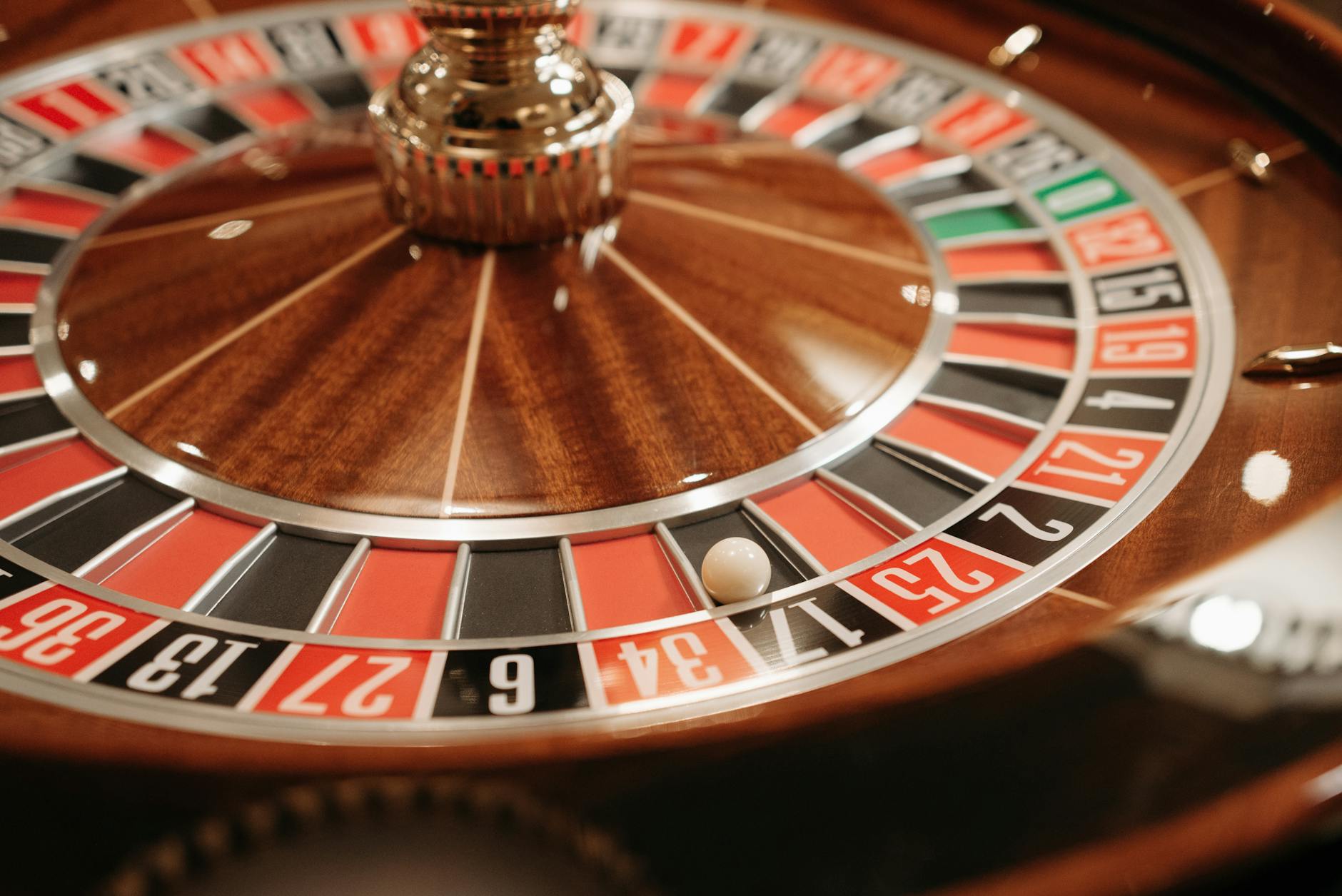
Photo by Pavel Danilyuk on Pexels
Putting It All Together: Playing With Awareness
Understanding casino mechanics does not guarantee a win. No article can do that, because no such guarantee exists. What it does is remove the mystery that leads to poor decisions.
Here is what you now know:
- RNG makes every spin independent. No pattern exists in a fair slot.
- RTP tells you the theoretical return over millions of plays, not your personal session outcome.
- Live dealer games use physical equipment, OCR technology, and regulatory oversight to maintain fairness.
- Volatility determines how a game feels to play, separate from its RTP.
- House edge varies by game type. Lower-edge games are mathematically kinder over time.
- Regulatory compliance provides an accountability structure that protects your deposits and your data.
Use this knowledge before you deposit. Pick games with RTPs above 96%. Match volatility to your bankroll. Start with small wagers while you learn a game is rules. Treat bonuses as a tool to extend your playtime, not as a guarantee of profit.
FAQ
What is RNG and why does it matter for my gameplay?
RNG (Random Number Generator) is the algorithm that determines every game outcome on Pin77. It produces genuinely unpredictable results for each spin or card draw, ensuring fairness and preventing any manipulation of outcomes.
How does RTP work — will I personally get 96% of my money back?
RTP (Return to Player) is calculated across millions of plays. It means the game returns 96% of all wagers to players collectively over time. Your individual session results will vary significantly from the theoretical RTP.
Are live dealer games on Pin77 fair?
Yes. Live dealer games use physical equipment inspected for integrity, OCR technology to capture results instantly, and regulatory oversight that requires transparent record-keeping and periodic audits.
Does house edge mean the platform is cheating me?
No. House edge is a standard mathematical structure that applies to all legitimate casinos. It is how platforms fund operations. A 3% house edge on European Roulette is transparent and consistent — it is not manipulation.
How can I play responsibly while understanding game mechanics?
Set deposit limits before you play, choose games with RTP above 96%, match volatility to your bankroll, and treat all casino games as entertainment with a cost — not an income source.
This website is intended for informational and entertainment purposes only. We do not offer real-money gambling services and are not affiliated with any online casino. All content is provided for demonstration and educational purposes only and does not constitute betting advice. Users are solely responsible for ensuring compliance with applicable local laws. We disclaim all liability for any losses or damages arising from the use of this website.
Pin77 · Blueprint Archive